
Before you start
- Board and software
- Compatible pH electrode and meter with its actual calibration procedure. No ESP32, GPIO or firmware is needed. Arduino-ESP32 3.3.2 remains the site review baseline for separate electronic examples.
- Supported hardware
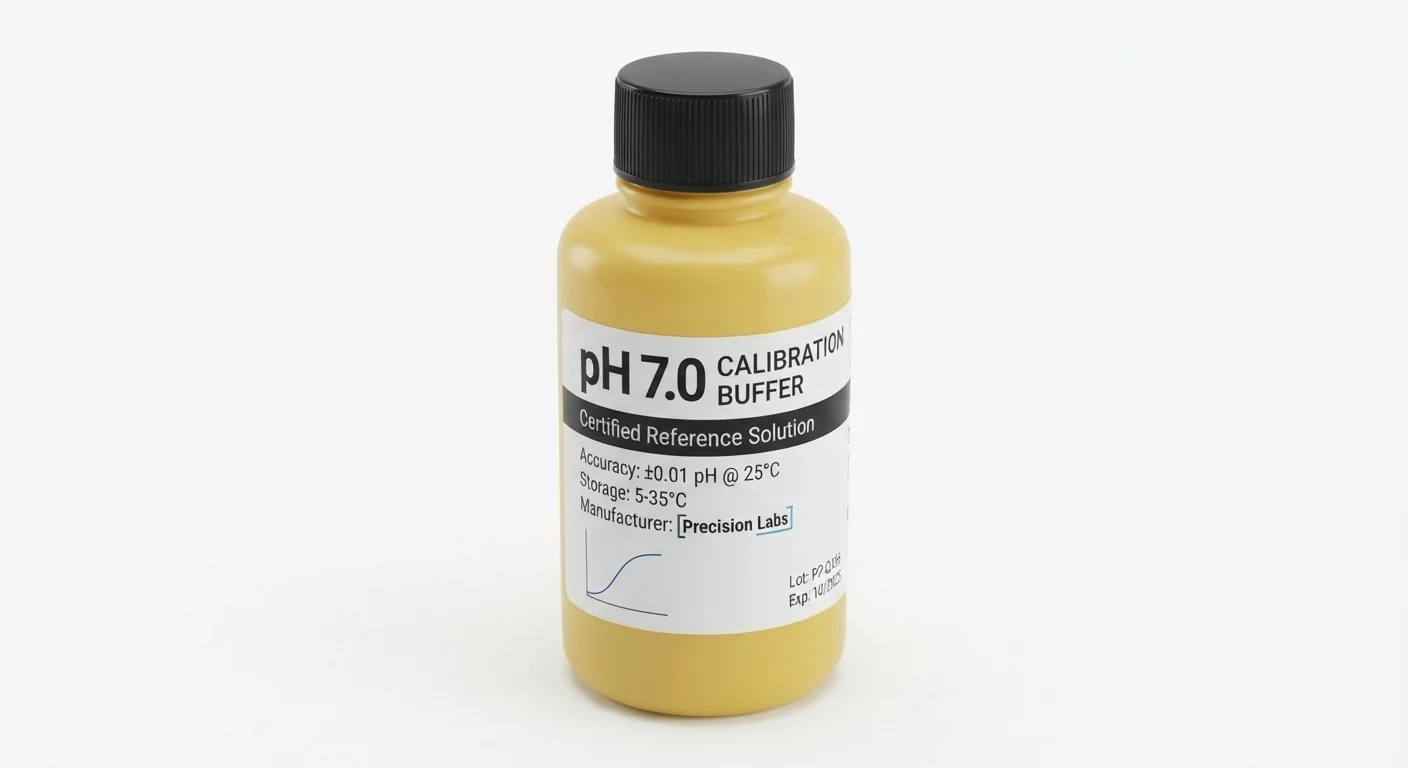
- Approved bottle illustration labelled pH 7.0. Actual certified value, temperature table, expiry and lot are unverified. Hanna HI7007 is a separate documented 7.01 reference, not identification of this bottle.
- Prerequisites and parts
- Compatible pH probe/meter with documented calibration procedure, fresh in-date labelled buffer, clean separate beakers, rinse water and the meter temperature method. No ESP32 wiring or generic analog-interface trimmer procedure is supplied.
- Libraries
- No firmware or library required for this exercise. Arduino-ESP32 3.3.2 is the site review baseline, not a dependency of this passive setup.
- Expected result
- The compatible pH meter accepts the selected reference using its actual procedure; no accuracy or calibration result is claimed.
- Verification status
- Documentation review only; no physical calibration or measurements performed. This is a product-style bottle illustration, not evidence of a certified lot or manufacturer identity. Use the actual bottle label and meter manual.
Overview
A near-neutral buffer is commonly the first calibration point for a pH electrode, allowing a compatible meter to establish its offset. This is a known solution for a separate probe and meter, not a sensor with electrical pins.
The approved illustration is labelled 7.0. Hanna HI7007 is a separately documented 7.01 reference, not the identified contents of that bottle. Select the instrument buffer set and actual reference temperature value before accepting a point. A single neutral point does not establish electrode slope across an acidic or alkaline range.
Technical Specifications
Arduino library: No firmware or library required for this exercise
| Specification | Value | Why it matters |
|---|---|---|
| Illustration label | pH 7.0 | Exact certified value/temperature and lot unknown. |
| Documented reference | Hanna pH 7.01 buffer | Use actual product temperature table; not an artwork specification. |
| Calibration role | near-neutral offset point | Follow instrument-supported points and sequence. |
Pinout
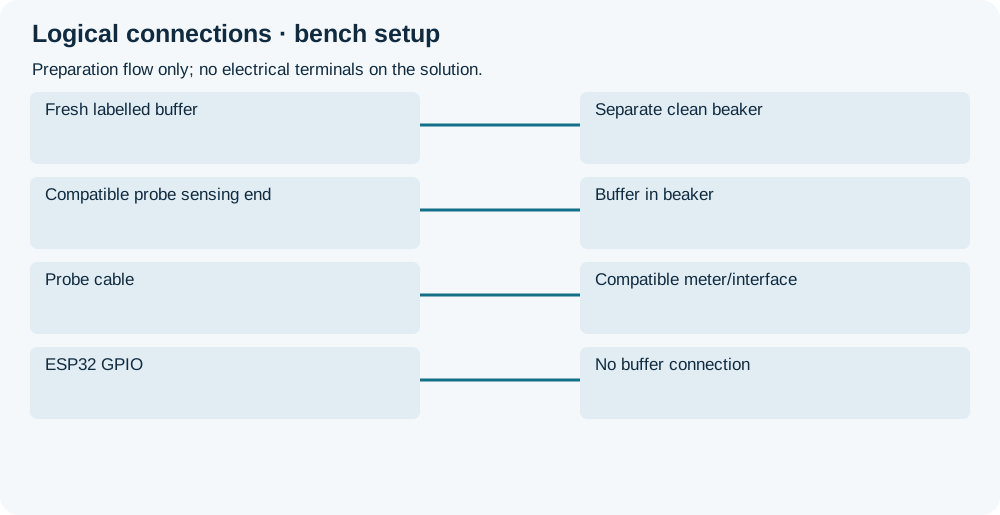
- Fresh labelled buffer Connection Separate clean beaker Check expiry/value/temperature.
- Compatible probe sensing end Connection Buffer in beaker Immersion per probe manual.
- Probe cable Connection Compatible meter/interface Keep connectors dry.
- ESP32 GPIO Connection No buffer connection Interface voltage needs separate review.
Wiring Diagram
Fresh pH 7 aliquot → clean beaker → compatible probe/meter; no liquid-to-GPIO connection.
| Item | Preparation / connection | Purpose and qualification |
|---|---|---|
| Fresh labelled buffer | Separate clean beaker | Check expiry/value/temperature. |
| Compatible probe sensing end | Buffer in beaker | Immersion per probe manual. |
| Probe cable | Compatible meter/interface | Keep connectors dry. |
| ESP32 GPIO | No buffer connection | Interface voltage needs separate review. |
Open wiring diagram at full size (new tab)
-
1
Follow the actual instrument procedure and select the correct buffer set and temperature reference.
-
2
Use a fresh separate aliquot and rinse/immerse the electrode according to its manual.
-
3
Allow the first point to stabilize and accept it; rinse before the next supported reference.
Expected Output
The meter should stabilize and accept the selected neutral reference. Check a failed first point before proceeding; matching one reference alone does not verify slope or sample accuracy.
How it works
Check that the electrode has been stored and hydrated according to its manual. Pour fresh near-neutral buffer into a clean beaker, rinse off storage solution as directed, and immerse the bulb and junction to the required depth. Wait for a stable reading; the meter may accept it automatically or require confirmation.
Keep stock capped and follow actual bottle storage/expiry instructions. Do not return used solution to stock or confuse calibration buffer with electrode storage solution. After the neutral point, rinse and use a separate fresh reference that brackets the intended samples: the pH 4 page covers the acidic-point workflow. Save the completed calibration in the meter.
Troubleshooting
| Problem | Possible cause | Solution |
|---|---|---|
| First point will not stabilize | Dry/dirty electrode, wrong immersion or stale solution. | Follow hydration/cleaning instructions, check bulb/junction coverage and try a fresh aliquot before changing calibration settings. |
| Meter expects 7.00 but bottle says 7.01 | Wrong buffer set or temperature reference. | Select the instrument-supported buffer set using the actual bottle documentation; do not substitute the illustration label. |
| Neutral point passes but other samples look wrong | One-point calibration does not assess slope over the measurement range. | Complete the documented multi-point procedure with a suitable second reference; no accuracy conclusion from one accepted point. |
Where you use it
- A documented pH 7 calibration point
- Checking reference stability before designing a probe interface
FAQ
It establishes the supported first point, not a universal slope or accuracy guarantee. Follow the full meter procedure.
No generic storage recommendation applies. Use the electrode manufacturer storage solution/procedure, keeping calibration stock uncontaminated.
Technical references
- Hanna calibration procedure — Compatible instrument procedure and stabilization; not a generic ESP32 interface calibration.
- Hanna pH 7.01 reference — Specific reference value and temperature dependence; artwork product unverified.